
POM vs PA66 for Wear-Resistant Plastic Parts: Base Resin Selection
Before choosing PTFE, aramid fiber, glass fiber or other wear-resistant additives, first confirm whether the part should start from POM or PA66. This guide compares the two base-resin routes through technical logic, molding-parameter debugging and three anonymized customer validation cases.
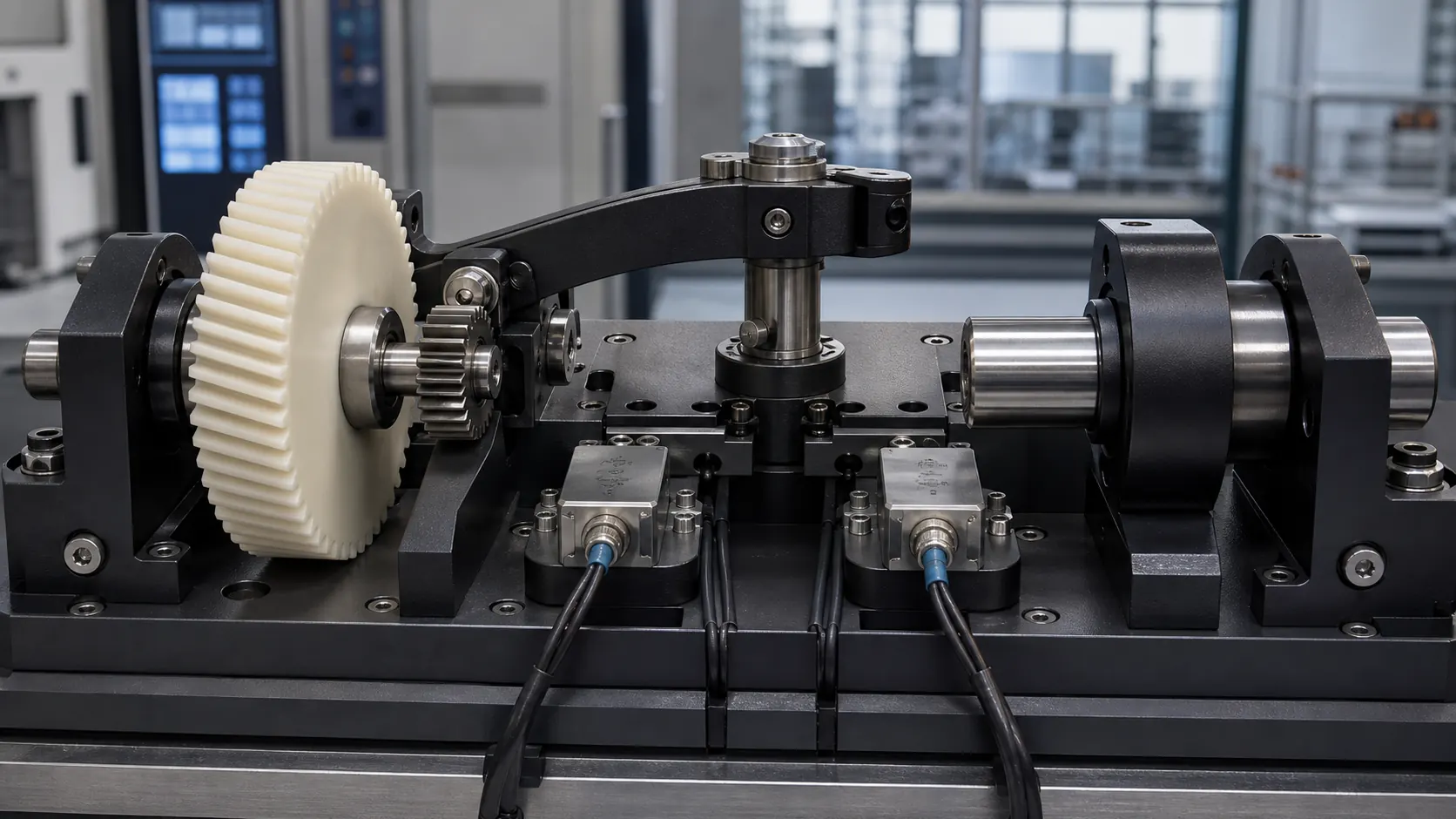
Buyer and engineer FAQ
Questions engineers often ask about this material route
Where can PA66 / POM with a wear-resistant plastic requirement be used?
Typical fields include gears, rollers, bushings, sliding blocks, guide rails and low-noise moving parts. For this article, DEYU would first confirm the working environment, wall thickness, expected lifetime and whether DGK-POM TF90M, DGK-PA66 FL20L matches the part geometry or needs formulation adjustment.
What are the main performance indicators for the "wear-resistant plastic" target on PA66 / POM?
Focus on friction coefficient, wear depth, PV value, noise, dimensional stability and mating material compatibility. Buyers should ask for data on molded parts, not only pellet data, because gate position, filler orientation and thickness can change the final value.
What should engineers watch during injection molding or processing?
For PA66 / POM, a practical starting window is 260-295°C melt / 75-100°C mold, dry before molding. Dry PA grades correctly, control glass or aramid fiber orientation and validate wear on the real mating surface. Final parameters should follow part thickness, gate design and the actual machine.
What details help DEYU recommend DGK-POM TF90M, DGK-PA66 FL20L more accurately?
Send the current resin or grade, drawing or photo, wall thickness, annual quantity, target standard, failure mode and required color. If a reference grade already passed one test but failed in production, include both data sets.
For a precise recommendation, share the part drawing, base resin, target performance, processing method and test standard with DEYU.
1. Start with the base resin, not the additive
When a moving plastic part fails from wear, noise, powder generation or clearance growth, the first reaction is often to add PTFE, aramid fiber, glass fiber, graphite, MoS2 or silicone lubricant. In practice, the base resin decides the working window before any additive package is selected. POM and PA66 can both be used for wear-resistant parts, but they solve different mechanical problems.
DGK-POM TF90M and DGK-PA66 FL20L are useful reference routes for comparing PTFE-modified POM and aramid-reinforced PA66 in real wear-resistant applications.
POM is usually the better starting point when the part needs low friction, stable dimensions, low moisture sensitivity and accurate gear or sliding geometry. PA66 is usually the better starting point when the part needs toughness, higher load capacity, impact resistance and a reinforced structural skeleton. If the wrong base resin is selected, later additive adjustment may reduce one problem while creating another: lower wear but brittle teeth, higher stiffness but noisy sliding, or good laboratory wear data but unstable field clearance.
2. POM technical route: precision, low friction and stable geometry
POM, also called acetal or polyoxymethylene, has naturally low friction, good fatigue behavior and better dimensional stability than moisture-sensitive nylons. It is especially useful for gears, rollers, sliders, low-load bushings, guide blocks and small precision moving parts where geometry control is more important than impact toughness.
| POM route | When to use it | Typical validation focus |
|---|---|---|
| Unfilled POM | Low to medium load, cost-sensitive movement, moderate wear target | Noise, surface scratch, molding shrinkage |
| POM + PTFE | Low friction, low noise, reduced wear powder, gear or sliding contact | Coefficient of friction, wear depth, torque stability |
| POM + internal lubricant | Smoother sliding without too much stiffness increase | Migration, surface appearance, long-cycle friction |
| Glass-fiber POM | Higher stiffness and lower deformation, with attention to mating-surface wear | Counterpart abrasion, warpage, fiber exposure |
| Conductive or antistatic POM | Sliding parts where static, dust or sensor instability matters | Resistance range plus wear and dimensional stability |
The main risk of a POM route is not basic wear resistance; it is the balance between toughness, tooth impact, weld-line strength and dimensional accuracy. In small gears, too much filler can lower friction but increase tooth chipping. In sliders, a very low-friction route can still fail if molding shrinkage creates uneven contact pressure. DEYU normally checks the part drawing, gate position, wall thickness, mating material, lubrication condition and operating temperature before locking the route.
3. PA66 technical route: toughness, load support and reinforced wear resistance
PA66, nylon 66 or polyamide 66, is stronger and tougher than POM in many structural applications. It can absorb impact, carry higher load and work well with fiber reinforcement. This makes PA66 suitable for bushings, guide rails, brackets, sliding supports, textile machine parts, automation parts and automotive functional parts.
| PA66 route | When to use it | Typical validation focus |
|---|---|---|
| Unfilled PA66 | Tough parts with moderate load and moderate wear demand | Moisture conditioning, clearance, impact |
| PA66 + PTFE | Nylon toughness with lower friction and lower noise | Friction after conditioning, wear powder, surface quality |
| Aramid-reinforced PA66 | Wear-resistant bushings, sliding sleeves, guide supports, low counterface damage | Clearance growth, vibration, fiber dispersion |
| Glass-fiber PA66 | High stiffness, high load, heat resistance and structural support | Counterpart wear, warpage, anisotropic shrinkage |
| PA66 + MoS2 or hybrid lubricant | Dry sliding and bearing-like applications where stable friction is required | Long-cycle wear, temperature rise, friction curve |
The main risk of PA66 is moisture-related dimensional movement. PA66 can perform very well after correct conditioning, but a part that passes a dry-room test may grow clearance after humid storage or field use. For PA66 parts, DEYU recommends measuring performance in three states: as-molded, conditioned, and after customer-side operating exposure.
4. Selection logic: choose by the failure mode
| Observed failure | More likely starting route | Reason |
|---|---|---|
| Gear noise, torque fluctuation, fine white wear powder | POM + PTFE | Low friction and stable tooth geometry are usually decisive |
| Bushing clearance growth under impact or vibration | Aramid-reinforced PA66 | Toughness and fiber-supported wear resistance are more important |
| High load plus heat near motor or mechanical housing | Glass-fiber or hybrid PA66 | Stiffness and heat resistance may outweigh low friction |
| Precision slider with tight tolerance and low water exposure | POM + lubricant or POM + PTFE | Dimensional stability and smooth sliding are priority |
| Guide rail with repeated impact and possible humid storage | PA66 route with conditioning validation | Impact margin is useful, but moisture movement must be verified |
| Mating metal surface is soft or coated | POM + PTFE or aramid PA66 | Abrasive glass-fiber exposure may damage the counterpart |
5. Parameter debugging before final material approval
Material selection and molding parameter adjustment should be treated as one workflow. Many wear failures are not caused by the resin alone. They come from shrinkage mismatch, contact pressure concentration, poor fiber dispersion, over-packing, insufficient drying, or a gate position that creates weak flow marks at the working surface.
| Debugging item | POM focus | PA66 focus |
|---|---|---|
| Drying | Avoid moisture marks and unstable melt; do not overheat for long periods | Dry thoroughly before molding, then condition samples before final judgment |
| Melt temperature | Keep stable flow without degradation or formaldehyde odor | Use enough melt temperature for fiber dispersion and weld-line strength |
| Mold temperature | Higher mold temperature improves surface and dimensional consistency | Balance crystallization, surface quality and cycle time |
| Packing pressure | Avoid over-packing that changes gear pitch or slider flatness | Control sink, warpage and bushing roundness |
| Gate position | Keep weld lines away from teeth, contact ribs and sliding surfaces | Reduce fiber orientation problems on loaded surfaces |
| Post-validation | Noise, torque, wear depth, dust, dimensional drift | Conditioned clearance, vibration, load deformation, long-cycle wear |
6. Application case 1: POM + PTFE gear for a compact drive unit
An appliance drive-unit customer used a standard POM gear in a dry-running gearbox. The initial material passed basic molding and assembly, but after the customer ran a 200-hour endurance test, the gear set showed rising noise, fine wear powder and torque fluctuation. The customer wanted to keep the same mold and avoid adding external grease.
Parameter adjustment
DEYU selected a POM + PTFE route close to DGK-POM TF90M and adjusted the injection window around tooth accuracy and surface finish. Trial settings used drying at 80 C for 3 hours, melt temperature around 195-205 C, mold temperature 80-90 C, medium injection speed and reduced final packing pressure to avoid pitch distortion. The gate vestige was trimmed more consistently because early trials showed local tooth interference after assembly.
| Customer validation item | Original POM | Adjusted POM + PTFE route |
|---|---|---|
| Endurance test | 200 h | 200 h |
| Gearbox noise after test | 61-63 dB | 53-55 dB |
| Maximum tooth wear depth | 0.085 mm | 0.026 mm |
| Torque fluctuation | 16-18% | 5-7% |
| Visible wear powder | Clear accumulation near gear root | Light trace only |
| Assembly reject rate | 7.8% | 2.1% |
The final customer-side decision was to use the POM + PTFE route because the part required quiet movement and stable gear geometry more than high impact strength. PA66 was not selected because moisture conditioning introduced a larger gear backlash variation in the same assembly space.
7. Application case 2: aramid PA66 bushing for a textile machine guide shaft
A textile equipment customer used a reinforced nylon bushing on a reciprocating guide shaft. The part carried intermittent side load and was exposed to shop humidity. The original grade had acceptable strength, but clearance increased after field running, causing vibration and yarn tension fluctuation.
Parameter adjustment
DEYU recommended an aramid-reinforced PA66 route similar to DGK-PA66 FL20L. The goal was to reduce abrasive wear while keeping enough toughness for impact. Trial molding focused on drying at 90 C for 4-5 hours, melt temperature around 275-285 C, mold temperature 85-95 C, slower injection into the sleeve area and controlled packing to improve roundness. Samples were measured both dry and after humidity conditioning before wear testing.
| Customer validation item | Original reinforced PA66 | Aramid PA66 route |
|---|---|---|
| Running test | 500 h | 500 h |
| Inner diameter clearance growth | 0.18 mm | 0.055 mm |
| Guide shaft surface scratch | Continuous bright wear band | Intermittent light polishing |
| Average vibration speed | 4.6 mm/s | 1.7 mm/s |
| Yarn tension fluctuation | +/- 12% | +/- 4% |
| Replacement interval estimate | 4-5 weeks | 10-12 weeks |
The final validation showed that PA66 was the better base resin for this bushing because impact and load support mattered more than the lowest possible friction coefficient. POM + PTFE gave low friction in bench sliding, but the customer rejected it after impact testing because edge chipping appeared at the flange.
8. Application case 3: automation sliding block with load, dust and dimensional control
An automation equipment customer used a sliding block in a dry linear transfer module. The part contacted an anodized aluminum rail and carried a 320-380 N intermittent load. The customer had two problems: glass-fiber nylon scratched the rail coating, while ordinary POM had low friction but deformed near the mounting holes after repeated load cycles.
Parameter adjustment
DEYU compared three routes: POM + PTFE, PA66 + aramid, and a hybrid PA66 wear-resistant route with reduced abrasive filler. The final route used PA66 as the base because screw retention and load support were critical. The molding trial adjusted gate location away from the rail-contact face, used a slightly higher mold temperature to improve surface consistency, and added conditioning before dimensional approval. The rail-contact face was polished only after stable shrinkage was confirmed.
| Customer validation item | Ordinary POM | Glass-fiber PA66 | Final PA66 wear route |
|---|---|---|---|
| Load cycle test | 300,000 cycles | 300,000 cycles | 300,000 cycles |
| Mounting-hole deformation | 0.16 mm | 0.04 mm | 0.05 mm |
| Rail coating wear width | 0.8 mm | 2.4 mm | 0.9 mm |
| Sliding noise | 56 dB | 64 dB | 57 dB |
| Dust adhesion around rail | Medium | High | Low to medium |
| Dimensional pass rate after conditioning | 91% | 94% | 97% |
This case shows why the selection cannot be simplified to POM equals low friction and PA66 equals high strength. The final material had to protect the aluminum rail, hold screw geometry and keep sliding noise acceptable. The route was approved only after the customer tested the assembled module, not just material plaques.
9. Final performance verification checklist
For wear-resistant POM and PA66 parts, DEYU recommends a final-part validation plan rather than judging only by resin datasheets. The test should match the real mating material, load, speed, temperature, humidity and cleaning condition.
| Verification item | Recommended method | Why it matters |
|---|---|---|
| Wear depth | Measure contact surface before and after fixed-cycle running | Confirms real material loss, not only visual polish |
| Friction and torque | Track torque curve or sliding force during the whole test | Shows whether friction rises after lubricant film changes |
| Noise | Measure at the same speed and assembly position | Important for gears, rollers and consumer or office equipment |
| Clearance | Measure as-molded, conditioned and after endurance test | Critical for PA66 bushings and guide parts |
| Counterpart damage | Inspect metal, coated metal or plastic mating surface | Glass fiber and hard fillers may transfer wear to the other part |
| Dimensional stability | Check key dimensions after molding, storage and operation | Prevents assembly drift and late-stage field complaints |
10. Practical selection advice
Choose POM first when the part is a precision gear, roller, slider or small moving component; the load is moderate; humidity is not the main risk; and the customer cares about low noise, low friction and stable dimensions. For this route, DGK-POM TF90M is a useful reference when PTFE modification is needed.
Choose PA66 first when the part is a bushing, support, guide rail, bracket or load-bearing sliding component; the application has impact, vibration, higher temperature or screw retention; and the design can include conditioning validation. For this route, DGK-PA66 FL20L is a useful reference when aramid reinforcement and wear resistance are needed.
Do not select only by datasheet coefficient of friction. Ask for the real part drawing, mating material, load, speed, movement mode, lubrication condition, temperature, humidity, expected life, current failure photos and customer test method. The best route is the one that passes the assembled-part validation with stable dimensions, controlled wear, acceptable noise and no damage to the counterpart.
Conclusion
POM and PA66 are both strong candidates for wear-resistant plastic parts, but they should not be treated as interchangeable materials. POM is often better for precision, low-friction and low-noise movement. PA66 is often better for tougher, reinforced and load-bearing moving parts. The final choice should be made through base resin selection, additive route design, molding parameter debugging and customer-side final performance verification.
DEYU can support POM + PTFE, aramid PA66, glass-fiber PA66 and hybrid wear-resistant routes with small-batch trials, formula adjustment, customer test review and final-part debugging.
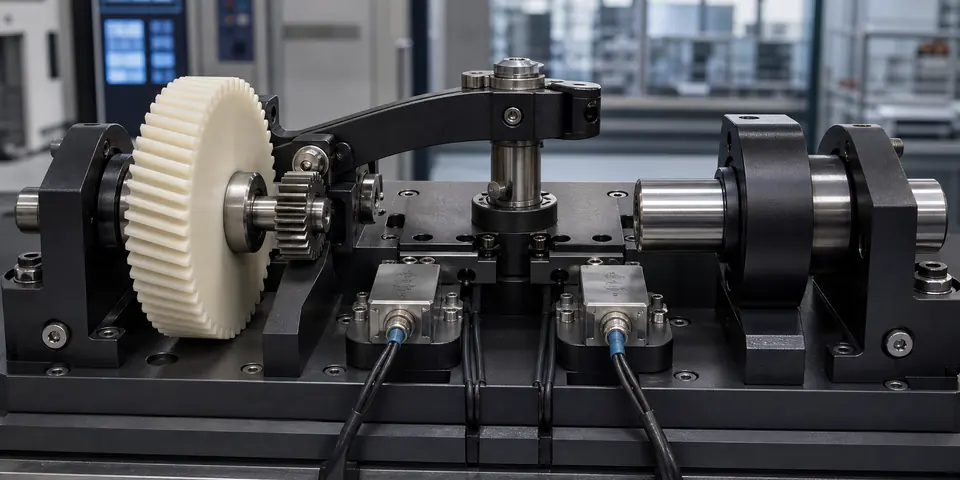
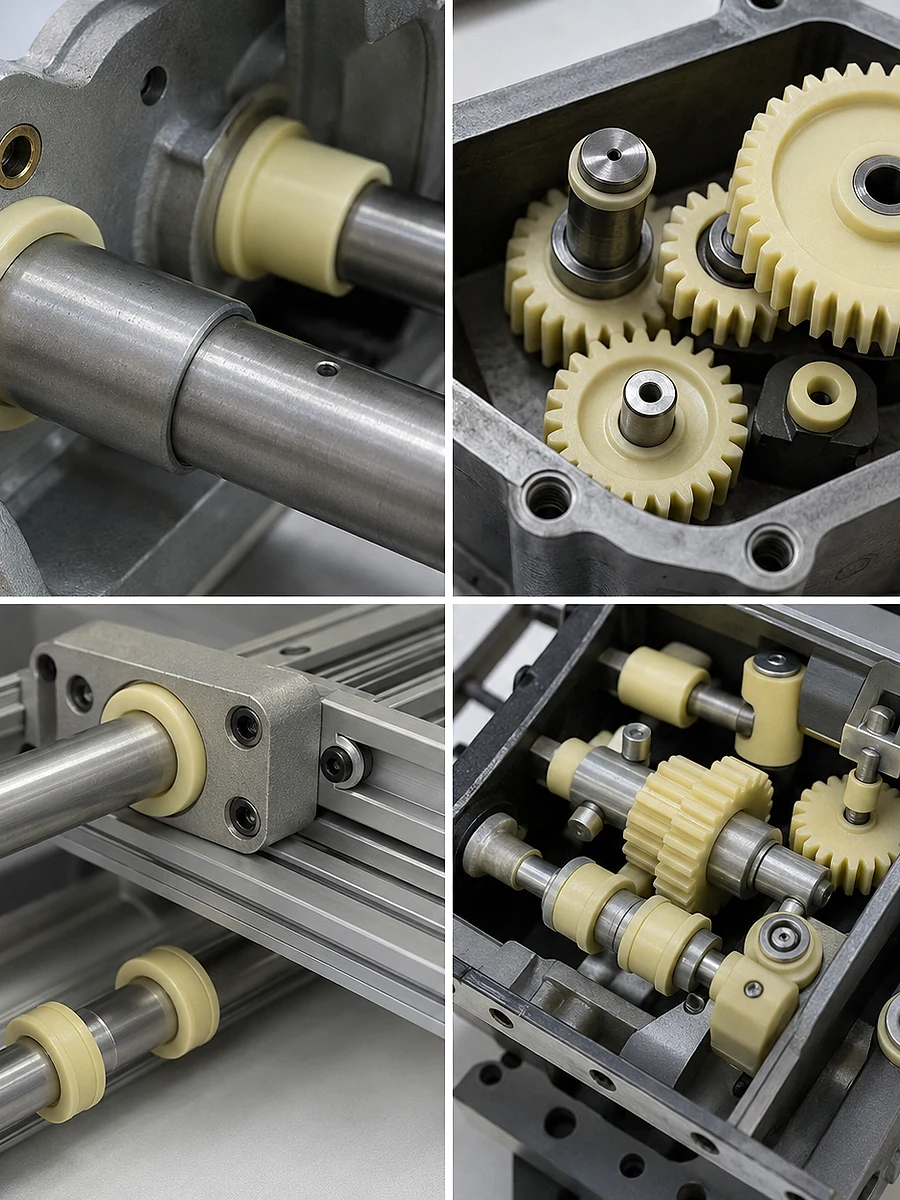
Engineering decision path
This page is intended to work as a material-selection brief, not only as a product introduction. The engineering route starts with the failure mode, then narrows the base resin, additive package, molding window, and validation method.
- Start with the contact condition: dry sliding, intermittent movement, lubricated contact, mating metal, or mating plastic each pushes the selection in a different direction.
- Use POM when low friction, dimensional stability in normal humidity, and smooth sliding are the main drivers; use PA66 when toughness, heat resistance, or reinforced structure becomes more important.
- Check moisture sensitivity, clearance growth, creep, noise, and wear debris before deciding that one resin is universally better.
- Validate with molded parts, not only plaques, because gate location and fiber or additive orientation change friction and dimensional behavior.
Anonymous customer cases
Case 1: small sliding guide in office equipment
The customer wanted lower noise and smoother movement under light load. DEYU treated the choice as a friction-and-clearance problem and compared POM with a wear-modified PA66 route before recommending the resin that kept motion stable after repeated cycling.
Case 2: load-bearing bushing near a warm motor
The original POM candidate showed acceptable initial friction but risked heat and creep limits. The project moved toward a PA66-based wear-resistant compound with verification focused on clearance, vibration, and temperature exposure.
How DEYU supports the project
- DEYU can adjust conductivity, wear resistance, toughness, flame-retardant direction, color, and processing flow as a combined formulation target instead of treating each property separately.
- Sample batches can be aligned with customer molds, part thickness, gate position, and expected tests before commercial supply.
- For international inquiries, DEYU engineers help translate application requirements into resin route, test items, sample plan, and risk points for purchasing and technical teams.