
PA66 Bushing Clearance Growth and Vibration: Aramid Solution Route
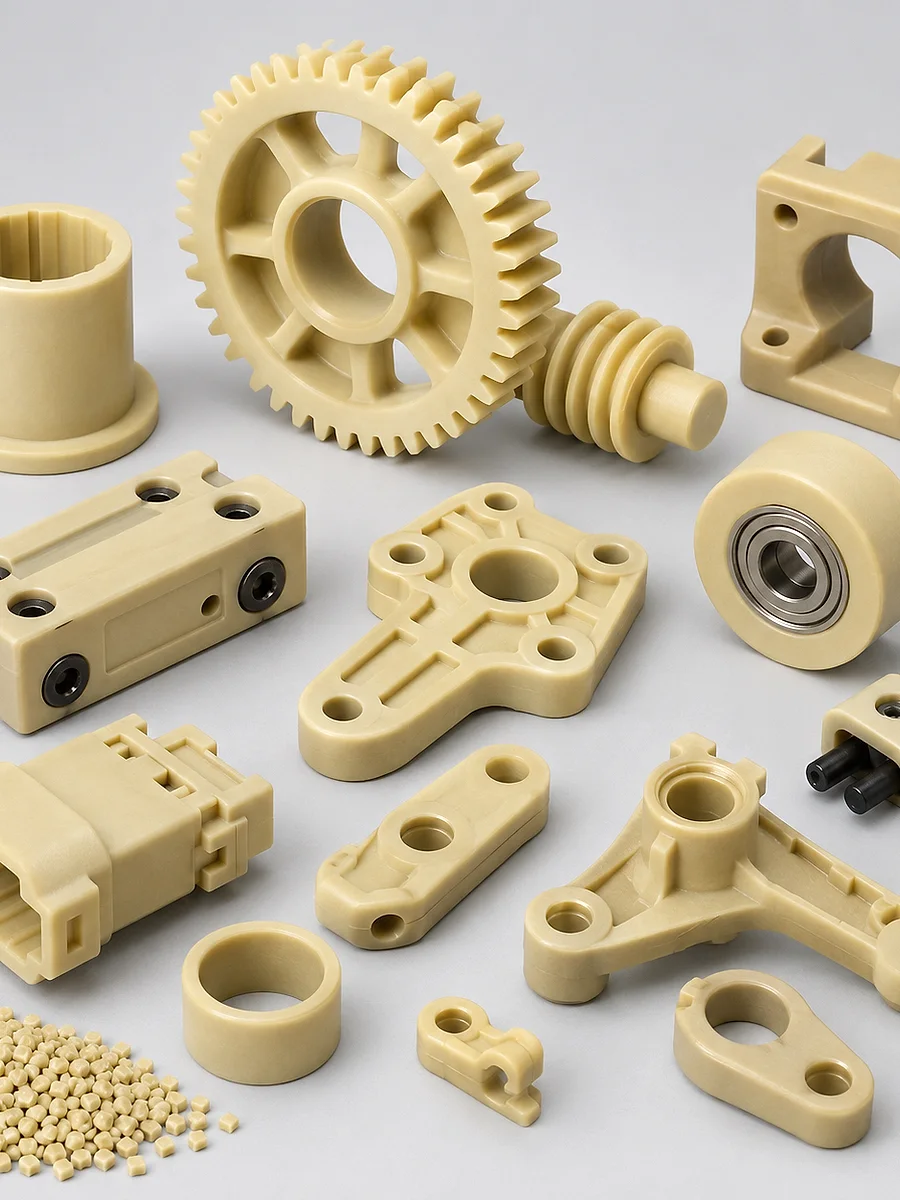
PA66 is widely used for bushings, guide blocks, and moving support parts. It offers good strength, toughness, and heat resistance. However, in repeated sliding or rotating support positions, ordinary PA66 may show:
Buyer and engineer FAQ
Questions engineers often ask about this material route
Where can PA66 with a reinforced plastic requirement be used?
Typical fields include structural brackets, high-stiffness housings, supports, clips and metal-replacement parts. For this article, DEYU would first confirm the working environment, wall thickness, expected lifetime and whether DGK-PA66 FL20L matches the part geometry or needs formulation adjustment.
What are the main performance indicators for the "reinforced plastic" target on PA66?
Focus on tensile strength, flexural modulus, impact balance, warpage, fiber orientation and screw holding. Buyers should ask for data on molded parts, not only pellet data, because gate position, filler orientation and thickness can change the final value.
What should engineers watch during injection molding or processing?
For PA66, a practical starting window is 260-295°C melt / 75-100°C mold, dry before molding. Control fiber breakage, gate direction and mold temperature; dry PA/PBT/PC blends before molding. Final parameters should follow part thickness, gate design and the actual machine.
What details help DEYU recommend DGK-PA66 FL20L more accurately?
Send the current resin or grade, drawing or photo, wall thickness, annual quantity, target standard, failure mode and required color. If a reference grade already passed one test but failed in production, include both data sets.
For a precise recommendation, share the part drawing, base resin, target performance, processing method and test standard with DEYU.
1. El problema
PA66 is widely used for bushings, guide blocks, and moving support parts. It offers good strength, toughness, and heat resistance. However, in repeated sliding or rotating support positions, ordinary PA66 may show:
DGK-PA66 FL20L. is the relevant aramid reinforced PA66 product page for bushing wear and clearance validation.
clearance growth; vibration; wear powder; surface scoring; assembly looseness; short replacement interval.
For bushings, the key failure is often not immediate breakage. It is gradual wear that changes clearance and affects the stability of the whole mechanism.
2. Why It Happens
Common reasons include:
ordinary PA66 is not wear-resistant enough for the load; humidity changes PA66 dimensions and mechanical behavior; the mating shaft or support surface is too rough; the formulation lacks internal wear balance; the bushing is too thin or has local stress concentration; the material is too hard and damages the mating surface; conditioning before testing is not consistent.
For PA66 bushings, moisture conditioning is important. A dry-as-molded part and a conditioned part may behave differently.
3. DEYU Material Direction
When ordinary PA66 wears too fast, but a hard filled nylon causes assembly or mating-surface problems, DEYU may recommend DGK-PA66 FL20L aramid reinforced PA66.
Development direction:
reduce wear depth; control clearance growth; retain toughness; reduce vibration; avoid severe mating-surface scratching; stabilize dimensions after conditioning; maintain injection molding processability.
4. Product Detail Fields Used for This Route
The article uses the current DEYU product-detail fields instead of estimated mechanical ranges.
Technical route, application scenarios and real-project validation
For this topic, the useful work starts beyond the generic material name. Engineering validation begins with the failed part, the property that must be held and the test method that will confirm the result after processing.
How DEYU narrows the route
Projects like this follow a wear-resistant low-friction route focused on friction, wear powder and clearance growth. The team first defines the target indicator and the limits for color, impact strength, flow, shrinkage and surface quality. The goal is not to choose one “best” additive, but to define a repeatable formulation window on the molded part.
Where this logic is applied
- gears, sliders and guide blocks
- bushings, bearings and repeat-motion parts
- assemblies where noise, dry friction, service life and dimensional stability matter
These scenarios differ in wall thickness, cycle time, appearance requirements and inspection method. The same material family can need a different adjustment when the mold, part geometry or test method changes.
Anonymized customer case and validation method
In one real anonymized customer project, the starting route was already directionally correct, but the part-level validation was not stable enough. DEYU kept the original application goal and changed the validation parameters and formulation balance rather than narrowing the use case artificially.
| What was compared | Why the previous route was weak | What was adjusted | How the result was evaluated |
|---|---|---|---|
| Material before replacement | the previous resin generated wear powder, rising noise or clearance growth after repeated motion, even though basic strength looked acceptable | PTFE, MoS2, aramid or lubrication balance, mating surface, shrinkage, molding window and testing on the real contact pair | DEYU samples showed more predictable friction and wear behavior; validation was based on the working assembly rather than only a standard plaque |
| DEYU route | The value on a standard specimen did not fully represent the real molded part. | Short sample run, control specimens, processing window and measurement method. | The result was recorded as a working range; serial supply still needs confirmation on the actual mold. |
This makes the article useful for both engineers and purchasers: the engineer can see what must be tested, while purchasing can see what information should be sent before requesting samples.
| Product field | DGK-PA66 FL20L |
|---|---|
| Base Resin | PA66 |
| Model | FL20L |
| Key Performance | Aramid reinforced; high strength, low shrinkage and excellent wear resistance. |
| Application Cases | High-speed friction parts, textile components and wear-resistant structural parts. |
| Processing | Injection molding |
| Color Service | Supported |
5. Customer Debugging Data
| Item | Ordinary PA66 Bushing | Hard Filled Nylon Trial | DEYU DGK-PA66 FL20L Aramid PA66 |
|---|---|---|---|
| Trial quantity | 3,000 pcs | 2,500 pcs | 5,000 pcs |
| Average wear depth | 0.121 mm | 0.091 mm | 0.045 mm |
| Clearance out-of-limit rate | 7.1% | 4.6% | 1.4% |
| Vibration complaint rate | 4.0% | 2.8% | 0.9% |
| Assembly scrap rate | 3.3% | 2.6% | 1.0% |
| Mating surface scratch | Low | Medium-high | Low-medium |
| Replacement cycle direction | 3 months | 4–5 months | 7–8 months |
6. Result Interpretation
The aramid PA66 route reduced wear depth by about 63% compared with ordinary PA66 in this internal customer case. It also improved clearance stability and reduced vibration complaints.
The key was not making the nylon simply harder. The improvement came from balancing aramid fiber, toughness, surface condition, and dimensional stability after conditioning.
Заключение
PA66 bushing wear should be evaluated by clearance change, vibration, wear depth, and replacement interval. When ordinary nylon wears too quickly and hard filled nylon damages the mating part, aramid reinforced PA66 may be a more balanced route.
Engineering decision path
This page is intended to work as a material-selection brief, not only as a product introduction. The engineering route starts with the failure mode, then narrows the base resin, additive package, molding window, and validation method.
- Clarify whether vibration comes from initial tolerance, moisture-related dimensional change, wear, creep, or mismatch with the mating shaft.
- PA66 conditioning must be part of the design review because clearance can change after the part absorbs moisture.
- Aramid reinforcement can support wear and stability, but it must be balanced with lubrication, molding shrinkage, and shaft surface compatibility.
- Validation should measure clearance, noise, vibration, and wear before and after conditioning, not only initial fit.
Anonymous customer cases
Case 1: small rotating bushing with field noise
The customer saw acceptable assembly fit but vibration after use. DEYU proposed an aramid-reinforced PA66 route and asked the team to compare dry and conditioned dimensions before judging the material.
Case 2: guide bushing in a compact drive module
The design had little room to change geometry. DEYU focused on formulation, shrinkage control, and mating-surface review so the customer could reduce clearance growth without a tooling redesign.
How DEYU supports the project
- DEYU can adjust conductivity, wear resistance, toughness, flame-retardant direction, color, and processing flow as a combined formulation target instead of treating each property separately.
- Sample batches can be aligned with customer molds, part thickness, gate position, and expected tests before commercial supply.
- For international inquiries, DEYU engineers help translate application requirements into resin route, test items, sample plan, and risk points for purchasing and technical teams.
Expanded Diagnosis for PA66 Bushing Clearance Growth
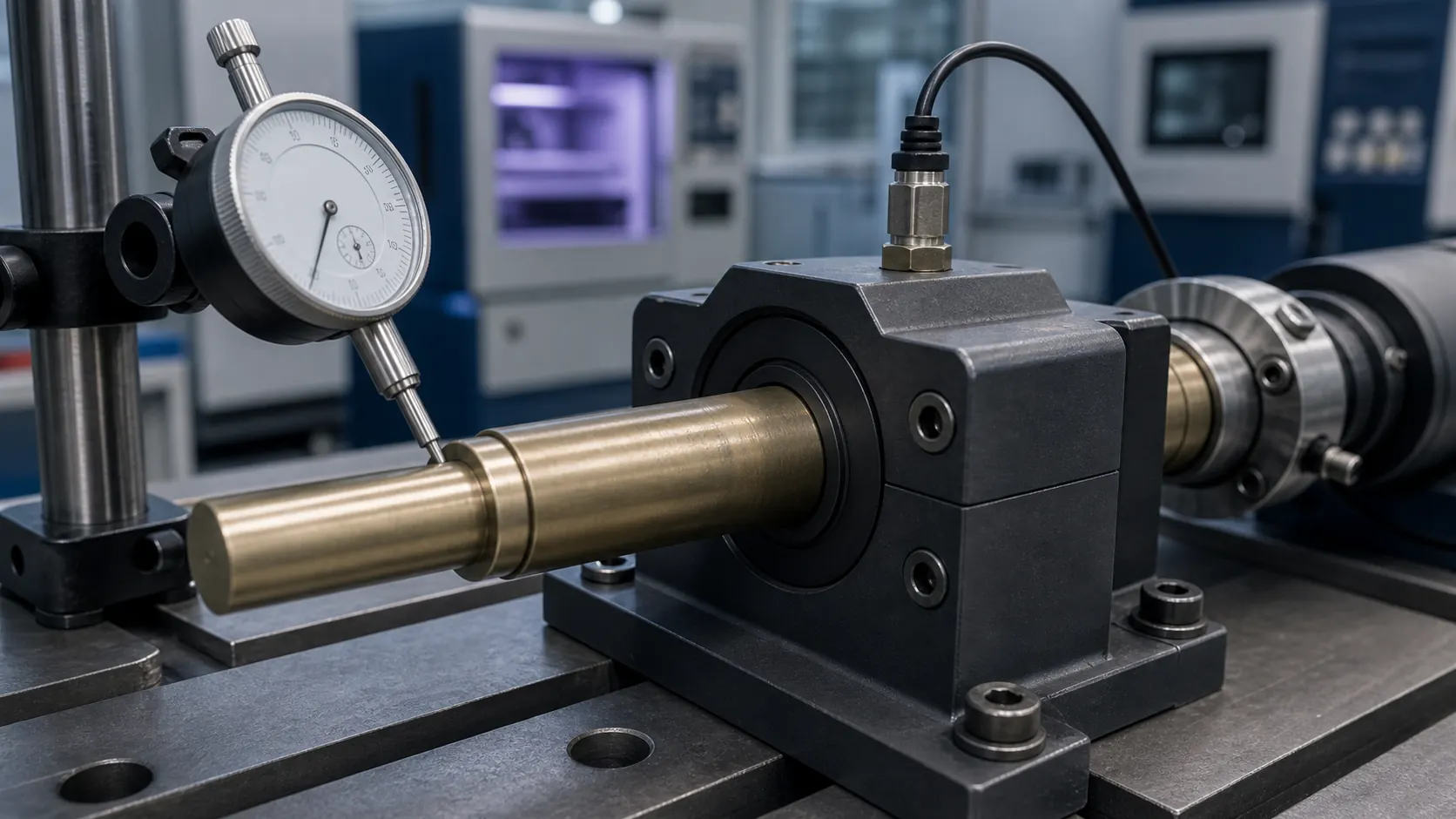
Clearance growth in a PA66 bushing is rarely caused by one single number in the material data sheet. The drawing may look correct, the initial inner diameter may pass inspection, and the assembly may feel smooth on day one. After load, heat, moisture and repeated movement, however, the bore can polish, creep or wear into an oval shape. Vibration then appears because the shaft is no longer supported in the same way along the full contact band.
DEYU treats this problem as a system issue involving material, shaft, surface roughness, lubricant, load direction and test cycle. A harder material is not automatically better. Too much glass fiber can improve stiffness but scratch the shaft or create abrasive debris. Too much internal lubricant can lower friction but weaken dimensional retention. Aramid-reinforced PA66 is useful when the part needs wear resistance, vibration damping and more forgiving contact behavior than a purely mineral or glass-fiber route.
Why Clearance Grows After the Drawing Looks Correct
PA66 absorbs moisture, and that moisture changes both dimensions and mechanical behavior. Under radial load, the contact surface can creep even when room-temperature measurements look acceptable. If the shaft is rough, the bushing may lose material by abrasive wear; if the shaft is too smooth, lubrication may not remain stable and stick-slip noise can appear. Temperature accelerates these mechanisms, especially in equipment that starts and stops many times each day.
The correct inspection therefore includes more than an initial caliper reading. Measure inner diameter before and after conditioning, record roundness, check wear debris color, listen for noise under load and inspect whether the wear track is centered. These observations tell whether the failure is creep, abrasive wear, adhesive wear, misalignment or an unstable lubrication state.
| Observed symptom | Likely mechanism | Validation action |
|---|---|---|
| Inner diameter grows evenly | Creep under radial load or insufficient compressive strength. | Run loaded aging and measure ID at fixed angular positions. |
| Bore becomes oval | Directional load, shaft misalignment or uneven wall support. | Map roundness and compare wear track position with assembly direction. |
| Squeak or intermittent vibration | Stick-slip, poor lubrication retention or unstable contact pressure. | Record torque/noise during start-stop cycles at operating temperature. |
| Dark or fibrous debris | Abrasive wear or filler exposure at the contact surface. | Inspect shaft roughness and bushing surface under magnification. |
| Heat build-up near the bore | Friction coefficient too high for the duty cycle. | Measure surface temperature during continuous and pulsed operation. |
Why Aramid Changes the Failure Mode
Aramid reinforcement does not simply make PA66 “stronger.” It changes how the contact surface behaves under sliding and vibration. Compared with a high glass-fiber route, aramid can reduce harsh abrasion and help the bore keep a more stable contact band. Compared with a heavily lubricated route, it can keep better mechanical support while still improving wear behavior. This is why aramid PA66 is often considered for bushings, guide sleeves and support rings where noise, clearance and shaft protection matter together.
The route still needs boundaries. If the application has high chemical exposure, high continuous temperature or a very high PV value, DEYU will not treat aramid PA66 as a universal answer. In those cases the team compares POM, PPS, PTFE-modified systems or other wear-resistant plastics. The selection is based on the shaft material, speed, load, temperature, grease condition and expected service life.
Prototype Validation Sequence
A practical trial begins with molded bushings made from the actual tool or a geometry close enough to represent the load band. DEYU recommends measuring ID, OD, roundness and surface appearance before assembly, after moisture conditioning, after a short running test and after an extended running test. If possible, run at least two shafts with different surface roughness levels; this separates material wear from counterface problems.
For purchasing and engineering teams, the most useful request package includes the drawing, current material, shaft material, shaft roughness, radial load, rotation or oscillation speed, lubrication condition, working temperature, target lifetime and failed-part photos. With these data, the aramid PA66 route can be compared against glass-fiber PA66, lubricated PA66 and alternative resin systems without relying on guesswork.