
DGK-PP DD2-3A Conductive PP for EMI Shielding and Precision Housings
DGK-PP DD2-3A is DEYU plastics' high-conductivity polypropylene compound engineered for applications requiring ultra-low surface resistivity in the 10²–10³ Ω range. This material bridges the gap between conventional conductive plastics (10⁴–10⁶ Ω) and low-resistance conductive performance, delivering reliable electrical performance while retaining polypropylene's inherent advantages — low density, chemical resistance, and excellent processability.
Buyer and engineer FAQ
Questions engineers often ask about this material route
Where can PP with a conductive plastic requirement be used?
Typical fields include ESD trays, electronic housings, fixtures, EMI parts and antistatic logistics parts. For this article, DEYU would first confirm the working environment, wall thickness, expected lifetime and whether DGK-PP DD2-3A conductive PP, DGK-PP DD4-5A-JC flame-retardant conductive PP matches the part geometry or needs formulation adjustment.
What are the main performance indicators for the "conductive plastic" target on PP?
Focus on surface resistance, volume resistance, dispersion uniformity, impact strength and molding stability. Buyers should ask for data on molded parts, not only pellet data, because gate position, filler orientation and thickness can change the final value.
What should engineers watch during injection molding or processing?
For PP, a practical starting window is 190-230°C melt / 30-60°C mold. Avoid excessive filler loading, control weld lines and verify resistance on the molded part. Final parameters should follow part thickness, gate design and the actual machine.
What details help DEYU recommend DGK-PP DD2-3A conductive PP, DGK-PP DD4-5A-JC flame-retardant conductive PP more accurately?
Send the current resin or grade, drawing or photo, wall thickness, annual quantity, target standard, failure mode and required color. If a reference grade already passed one test but failed in production, include both data sets.
For a precise recommendation, share the part drawing, base resin, target performance, processing method and test standard with DEYU.
Product Overview
DGK-PP DD2-3A is DEYU plastics' high-conductivity polypropylene compound engineered for applications requiring ultra-low surface resistivity in the 10²–10³ Ω range. This material bridges the gap between conventional conductive plastics (10⁴–10⁶ Ω) and low-resistance conductive performance, delivering reliable electrical performance while retaining polypropylene's inherent advantages — low density, chemical resistance, and excellent processability.
Related DEYU plastics material references for this selection topic: DGK-PP DD2-3A conductive PP and DGK-PP DD4-5A-JC flame-retardant conductive PP.
What 10²–10³ Ω surface resistivity means in context:
| Material Type | Typical Surface Resistivity | Comparison to DD2-3A |
|---|---|---|
| Standard PP (unfilled) | >10¹² Ω | Millions of times higher |
| Anti-static PP | 10⁹–10¹¹ Ω | Millions of times higher |
| Standard conductive PP (carbon black) | 10⁴–10⁶ Ω | 10–1,000× higher |
| DGK-PP DD2-3A | 10²–10³ Ω | Baseline |
| Highly conductive graphite composites | 10¹–10² Ω | Comparable |
| Metal | <10⁻² Ω | Still lower |
DGK-PP DD2-3A achieves surface resistivity in the 10²–10³ Ω range — 2–3 orders of magnitude lower than conventional carbon black-filled conductive PP (10⁴–10⁶ Ω). This ultra-low resistivity enables applications where rapid static charge dissipation, EMI shielding validation, and electrical continuity are critical.
Key applications:
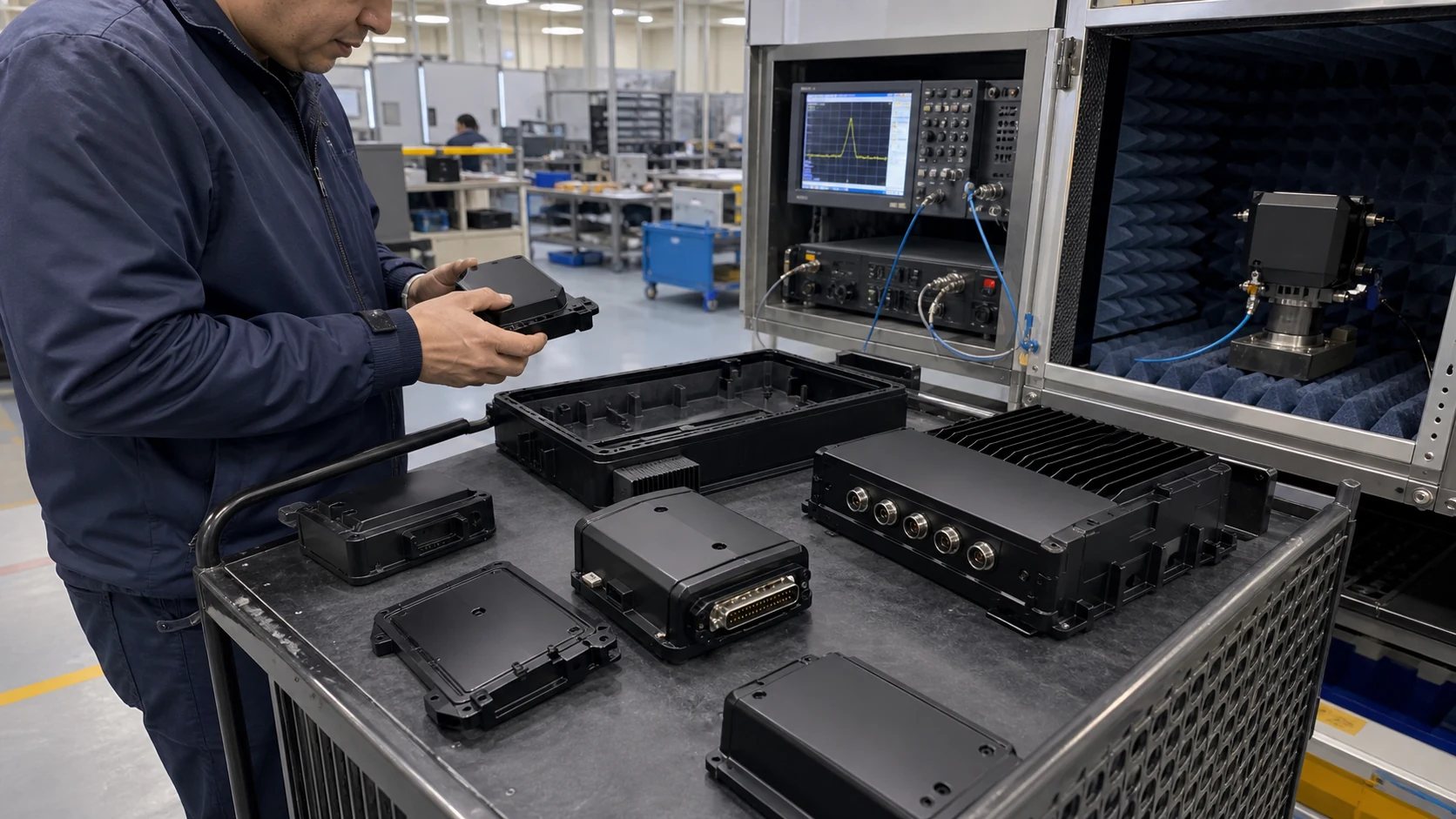
Shielding-related conductive components and enclosures
Low-resistance conductive housings for EMI shielding validation
Electronic equipment housings requiring high conductivity
Precision instruments and measuring equipment
Electrical connectors and grounding components
Interference suppression and shielding applications
Technical Foundation — How DGK-PP DD2-3A Achieves Ultra-Low Resistivity
1. Conductive Filler Network
DGK-PP DD2-3A utilizes a conductive filler network formulation. Unlike conventional carbon black-filled PP compounds that require 15–20% loading to achieve moderate conductivity, conductive filler systems create highly efficient conductive networks at significantly lower loadings. The high aspect ratio of conductive fillers (typically 100–1,000+) enables the formation of a three-dimensional conductive network that provides:
Ultra-low resistivity — surface resistivity in the 10²–10³ Ω range
Uniform conductivity — consistent electrical performance across the part
Property preservation — mechanical properties closer to unfilled PP than carbon black alternatives
2. Superior Dispersion — The Key to Consistent Performance
The dispersion quality of conductive fillers is critical for achieving stable, predictable resistivity. Poor dispersion creates agglomerates that act as stress concentrators and create localized resistivity variations. DGK-PP DD2-3A's advanced compounding process ensures uniform distribution of the conductive filler network throughout the PP matrix.
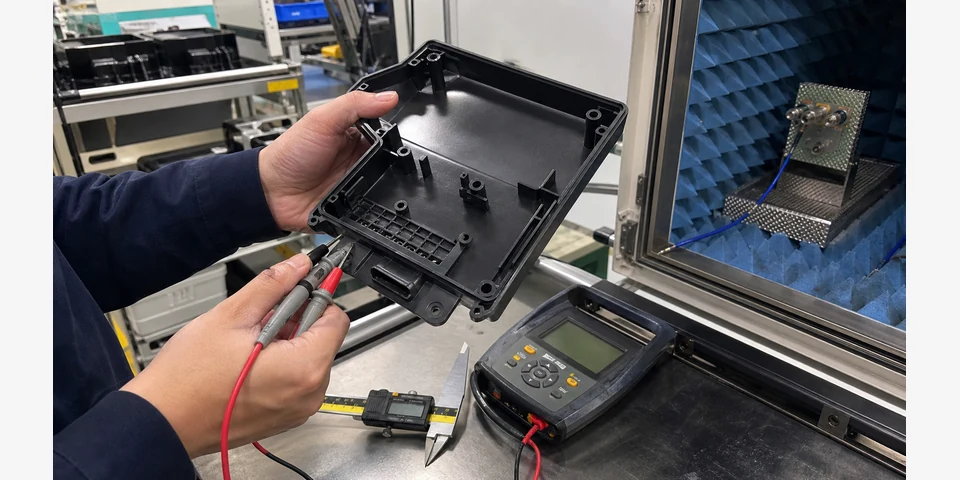
Validation: Surface-resistance uniformity should be checked at multiple molded-part positions before approval.
3. PP Matrix — The Right Balance
Polypropylene was selected as the base resin for its unique combination of properties:
| Property | Value | Advantage |
|---|---|---|
| Density | 0.99 g/cm³ | Lightweight — 80–90% lighter than metal |
| Chemical resistance | Excellent (acids, alkalis, solvents) | Survives aggressive environments |
| Processability | Wide processing window | Supports injection molding and extrusion |
| Cost | Low | Cost-effective compared to specialty compounds |
4. Dual-Function Capability: Conductivity + EMI shielding validation
DGK-PP DD2-3A provides both electrical conductivity and EMI shielding validation. The continuous conductive filler network attenuates electromagnetic waves, making the material suitable for applications requiring interference suppression:
Industrial electronic housings
Precision electronic enclosure evaluation
Electronic equipment housings
Interference suppression components
Product Data
Core Specifications:
| Property | Value | Test Method | Notes |
|---|---|---|---|
| Product Model | DGK-PP DD2-3A | — | — |
| Base Resin | Polypropylene (PP) | — | — |
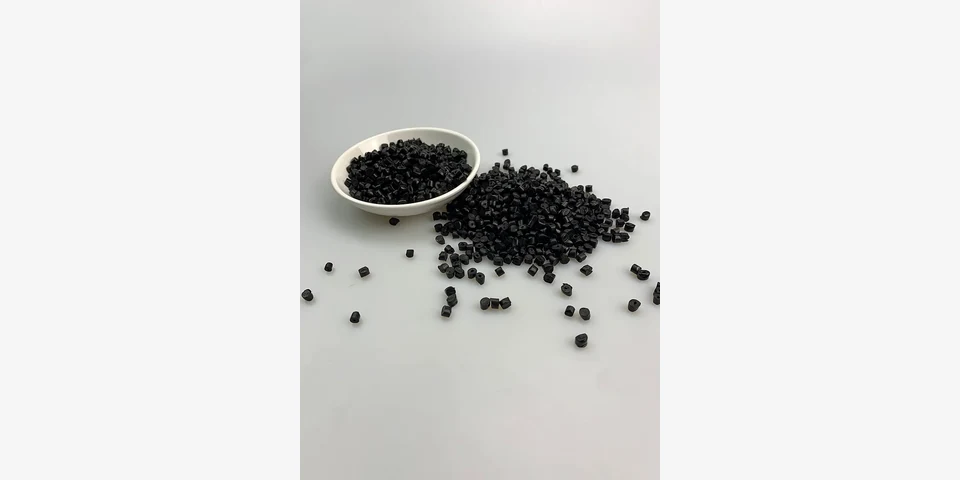
| Appearance | Black | — | — |
| Density | 0.99 g/cm³ | ASTM D-792 | Lightweight — 80–90% lighter than metal |
| Surface Resistivity | 10²–10³ Ω | ASTM D-257 | Ultra-low — 2–3 orders lower than standard conductive PP |
| Flammability | HB | UL-94 | — |
| Processing Method | Injection molding | — | Injection molding grade |
| Packaging | 25 kg/bag | — | Standard industrial packaging |
Mechanical Properties:
| Property | Value | Test Method | Notes |
|---|---|---|---|
| Tensile Strength | 23.1 MPa | ASTM D-638 | — |
| Tensile Modulus | 5,570 MPa | ASTM D-638 | High stiffness |
| Bending Strength | 36.2 MPa | ASTM D-790 | — |
| Flexural Modulus | 3,472 MPa | ASTM D-790 | — |
| Izod Notched Impact Strength | 112 J/m (23°C, 3.18 mm) | GB/T 1043.1-2008 | Excellent impact resistance |
| Elongation at Break | 14% | ASTM D-638 | — |
| Molding Shrinkage | 0.3–0.7% | ASTM D-955 | Low and predictable |
Thermal Properties:
| Property | Value | Test Method | Notes |
|---|---|---|---|
| Heat Deflection Temperature | 107°C (1.8 MPa, unannealed) | ASTM D-1525 | Good heat resistance for PP |
| Drying Temperature | 90°C | — | Before processing |
| Drying Time | 4–5 hours | — | — |
| Processing Temperature | 210–220°C | — | Injection molding |
| Mold Temperature | 80°C | — | Recommended |
Application Deep Dive
1. Electromagnetic Interference (EMI shielding validation) Shielding
DGK-PP DD2-3A provides low-resistance conductive behavior for EMI shielding validation for sensitive electronic components. The continuous conductive filler network attenuates electromagnetic waves, preventing interference between components and protecting against external electromagnetic radiation.
Typical applications:
EMI shielding validation enclosures and housings
Electronic equipment cases
Interference suppression components
Shielded packaging for sensitive electronics
2. Industrialy Electronics and Precision electronics Components
DGK-PP DD2-3A is considered for industrial electronic housings and precision electronics auxiliary structural components. The combination of ultra-low resistivity, lightweight, and reliable performance meets the demanding requirements of defense and precision electronics applications.
Typical applications:
Industrialy electronic enclosures
Precision electronics electronic housings
Avionics components requiring static discharge
Ground support equipment
3. Precision Instruments and Measuring Equipment
The uniform conductivity and dimensional stability of DGK-PP DD2-3A make it suitable for precision instruments and measuring equipment.
Typical applications:
Precision instrument housings
Measuring equipment enclosures
Laboratory equipment components
Test and measurement fixtures
4. Electrical Connectors and Grounding Components
DGK-PP DD2-3A's ultra-low resistivity enables reliable electrical connections and grounding paths.
Typical applications:
Electrical connectors
Grounding components
Static discharge paths
Conductive contacts
Processing Guidelines
Recommended Injection Molding Parameters:
| Parameter | Value | Notes |
|---|---|---|
| Drying Temperature | 90°C | — |
| Drying Time | 4–5 hours | Ensure thorough drying before processing |
| Injection Temperature | 210–220°C | Maintain consistent temperature |
| Mold Temperature | 80°C | — |
| Processing Method | Injection molding | Injection molding grade |
Key Processing Considerations:
| Consideration | Importance | Guidance |
|---|---|---|
| Pre-drying | Critical | conductive-filler compounds are moisture-sensitive; dry thoroughly at 90°C for 4–5 hours |
| Temperature control | High | Maintain melt temperature within 210–220°C range |
| Shear control | Moderate | Excessive shear can affect conductive filler network orientation |
| Mold temperature | Moderate | 80°C recommended for optimal crystallization and surface quality |
Drying Requirement:
DGK-PP DD2-3A contains conductive fillers that can be affected by moisture. Proper drying is essential:
Drying temperature: 90°C
Drying time: 4–5 hours
Moisture content target: <0.1%
Note: Inadequate drying can cause surface defects (freckles) — verified through production experience
Customer Validation Scenario
Context: An precision electronics component manufacturer was developing EMI shielding validation housings for avionics equipment. The application required: (1) surface resistivity below 10⁴ Ω for low-resistance conductive behavior for EMI shielding validation, (2) lightweight construction (density <1.0 g/cm³), (3) dimensional stability for precision component mounting, and (4) injection moldability for complex geometry.
Initial approach: The manufacturer tested a carbon black-filled conductive PP (15% loading). The material achieved surface resistivity of 5×10⁵ Ω/sq — insufficient for the EMI shielding validation requirement. Additionally, the high carbon black loading reduced impact strength and created surface roughness.
Problem analysis:
| Issue | Root Cause | Impact |
|---|---|---|
| Resistivity too high | Carbon black loading insufficient for EMI shielding validation | Failed shielding effectiveness requirement |
| Surface roughness | Carbon black agglomerates | Failed surface quality standard |
| Reduced impact strength | High carbon black loading | Marginal for assembly |
DEYU solution — DGK-PP DD2-3A:
DEYU recommended switching to DGK-PP DD2-3A, offering:
Surface resistivity in the 10²–10³ Ω range — 2–3 orders lower than carbon black
Uniform conductive filler dispersion — consistent conductivity across the part
Excellent surface quality — smooth, black surface
Impact strength of 112 J/m — superior toughness
Validation Data Table (customer internal trial structure):
| Parameter | Carbon Black PP (15%) | DGK-PP DD2-3A | Target | Improvement |
|---|---|---|---|---|
| Surface Resistivity (Ω) | 5×10⁵ | 10²–10³ | <10⁴ | 500–5,000× lower |
| Surface Quality | Rough, visible defects | Smooth, glossy | Smooth | Significantly improved |
| Impact Strength (J/m) | 65 | 112 | >80 | +72% |
| Density (g/cm³) | 1.02–1.05 | 0.99 | <1.0 | Lighter |
| EMI shielding validation | Marginal | Effective | Pass | Achieved |
Result Interpretation:
DGK-PP DD2-3A delivered the required ultra-low resistivity while maintaining excellent surface quality and mechanical properties. The conductive-filler conductive network provided consistent conductivity across the part, eliminating the hotspot issues common with carbon black compounds. The impact strength of 112 J/m exceeded the 80 J/m target.
DEYU plastics' contribution: DEYU demonstrated that conductive-filler conductive PP can achieve EMI shielding validation performance that carbon black compounds cannot match, while preserving PP's processability and mechanical properties.
Next steps: Full production validation. DEYU can provide ongoing technical support and in-process resistivity monitoring protocols.
Suitable Applications
| Application | Why DGK-PP DD2-3A | Key Requirement |
|---|---|---|
| EMI shielding validation housings | Ultra-low resistivity + processability | 10²–10³ Ω surface resistivity |
| Industrial electronic housings | Reliable conductivity + lightweight | 10²–10³ Ω, density 0.99 g/cm³ |
| Precision electronics electronic components | EMI shielding validation + dimensional stability | 10²–10³ Ω, precise tolerances |
| Precision instrument housings | Uniform conductivity + surface quality | 10²–10³ Ω, smooth finish |
| Electrical connectors | Low resistance + mechanical strength | 10²–10³ Ω, impact resistance |
| Interference suppression components | EMI shielding validation attenuation + injection moldability | 10²–10³ Ω, complex geometry |
| Electronic equipment enclosures | Static discharge + EMI shielding validation | 10²–10³ Ω |
What Buyers Should Provide for Selection
To receive a precise recommendation for DGK-PP DD2-3A applications, buyers should provide:
Target resistivity — surface or volume resistivity range (Ω or Ω·cm) with test standard
Application description — EMI shielding validation, industrial electronic housings, precision electronics, precision instruments, or other?
Part drawing — geometry, wall thickness, gate location
Processing method — injection molding, extrusion, compression molding
Mechanical requirements — impact strength, tensile strength, flexural modulus targets
Thermal requirements — continuous use temperature, peak temperature
EMI shielding validation requirement — shielding effectiveness target (dB) and frequency range
Surface appearance requirements — gloss, texture, visible defect tolerance
Production volume — annual or monthly quantity
Cost constraints — target material cost per kilogram or per part
DEYU can support with:
Material selection for specific high-conductivity applications
Processing parameter optimization for consistent resistivity
Small-batch validation (25–100 kg) with full electrical and mechanical testing
Technical support during molding trials
In-process quality monitoring protocols
Conclusion
DGK-PP DD2-3A represents a significant advancement in conductive polypropylene technology. With surface resistivity in the 10²–10³ Ω range — 2–3 orders of magnitude lower than conventional conductive PP — this material enables EMI shielding validation, industrial electronic housings, precision electronic components, and precision instrument applications that were that require part-level validation before approval.
Key takeaways:
Ultra-low resistivity — 10²–10³ Ω surface resistivity, enabling EMI shielding validation and rapid static dissipation
conductive-filler technology — advanced conductive filler composite provides superior conductivity at lower loadings than carbon black
Property preservation — impact strength of 112 J/m and tensile strength of 23.1 MPa — significantly better than carbon black alternatives at equivalent conductivity
Excellent surface quality — smooth, black surface with consistent conductivity across the part
Lightweight — density of 0.99 g/cm³ — 80–90% lighter than metal alternatives
Application-proven — validated in industrial electronic housings, precision electronic components, EMI shielding validation, and precision instruments
Processable — injection molding compatible with standard equipment
DGK-PP DD2-3A is available for small-batch validation and full production orders. DEYU plastics' technical team can provide application-specific guidance, process optimization support, and full test documentation for qualification and validation.