Why Wear-Resistant Plastic Parts Still Fail: Defect Rate, Wear Depth, Noise, and Process Tuning
A material may be described as wear-resistant, but the final part can still fail. The reason is usually not one single property. Wear problems are often caused by the combination of material, mold, friction pair, load, speed, temperature, and assembly condition.
Buyer and engineer FAQ
Questions engineers often ask about this material route
Where can POM with a wear-resistant plastic requirement be used?
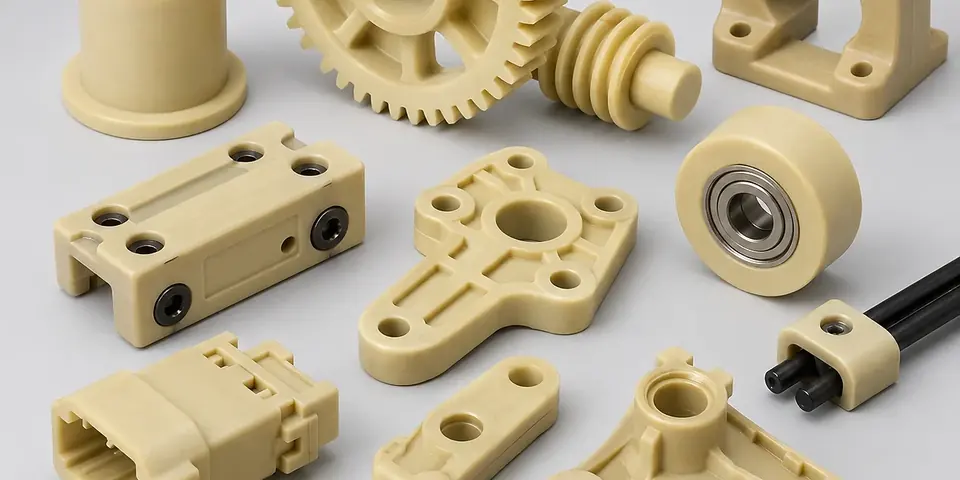
Typical fields include gears, rollers, bushings, sliding blocks, guide rails and low-noise moving parts. For this article, DEYU would first confirm the working environment, wall thickness, expected lifetime and whether DGK-POM FL100T, wear-resistant plastic compounds matches the part geometry or needs formulation adjustment.
What are the main performance indicators for the "wear-resistant plastic" target on POM?
Focus on friction coefficient, wear depth, PV value, noise, dimensional stability and mating material compatibility. Buyers should ask for data on molded parts, not only pellet data, because gate position, filler orientation and thickness can change the final value.
What should engineers watch during injection molding or processing?
For POM, a practical starting window is 180-210°C melt / 70-100°C mold. Dry PA grades correctly, control glass or aramid fiber orientation and validate wear on the real mating surface. Final parameters should follow part thickness, gate design and the actual machine.
What details help DEYU recommend DGK-POM FL100T, wear-resistant plastic compounds more accurately?
Send the current resin or grade, drawing or photo, wall thickness, annual quantity, target standard, failure mode and required color. If a reference grade already passed one test but failed in production, include both data sets.
For a precise recommendation, share the part drawing, base resin, target performance, processing method and test standard with DEYU.
1. Why “Wear-Resistant” Does Not Always Mean the Part Will Pass
A material may be described as wear-resistant, but the final part can still fail. The reason is usually not one single property. Wear problems are often caused by the combination of material, mold, friction pair, load, speed, temperature, and assembly condition.
DGK-POM FL100T and wear-resistant plastic compounds. DGK-POM FL100T is a useful aramid reinforced POM reference when the failure mode involves wear depth, clearance growth, and toughness balance
Common failure symptoms include:
wear depth exceeds limit; noise increases after operation; white or black wear powder appears; part clearance becomes too large; scrap rate increases during assembly; the mating part is scratched; part cracks at the edge or corner; dimension changes after running.
For this reason, DEYU evaluates wear-resistant plastics with customer debugging records, not only material datasheets.
2. Defect Rate Is Often More Useful Than a Single Material Parameter
A pellet datasheet can show tensile strength, flexural modulus, density, or melt flow. These are useful, but they do not directly show whether the final part passes the customer’s production line.
More useful customer data includes:
monthly production quantity; trial batch quantity; assembly scrap rate; wear-depth failure rate; noise complaint rate; replacement interval; post-test dimensional change; number of parts passing the life-cycle test.
For wear-resistant plastic projects, a 2% drop in assembly scrap rate may be more meaningful than a small change in tensile strength.
3. Typical Problem Diagnosis
| Problem | Possible Cause | Material Direction |
|---|---|---|
| High wear depth | Wrong wear route, poor friction pair | PTFE, aramid, hybrid wear system |
| Noise increase | High friction, poor surface | Low-friction POM, PTFE route |
| Clearance increase | Wear + dimensional instability | Aramid PA66, reinforced route |
| Mating surface damage | Filler too hard or exposed | Softer wear route, better surface balance |
| Assembly cracking | Material too brittle | Toughness balance, lower filler stress |
| High molding scrap | Poor flow or shrinkage mismatch | Flowability and process tuning |
| Wear powder | Poor sliding stability | Self-lubricating or hybrid route |
4. Internal Customer Case: Wear-Resistant Part Failing Despite Material Upgrade
Original Pain Point
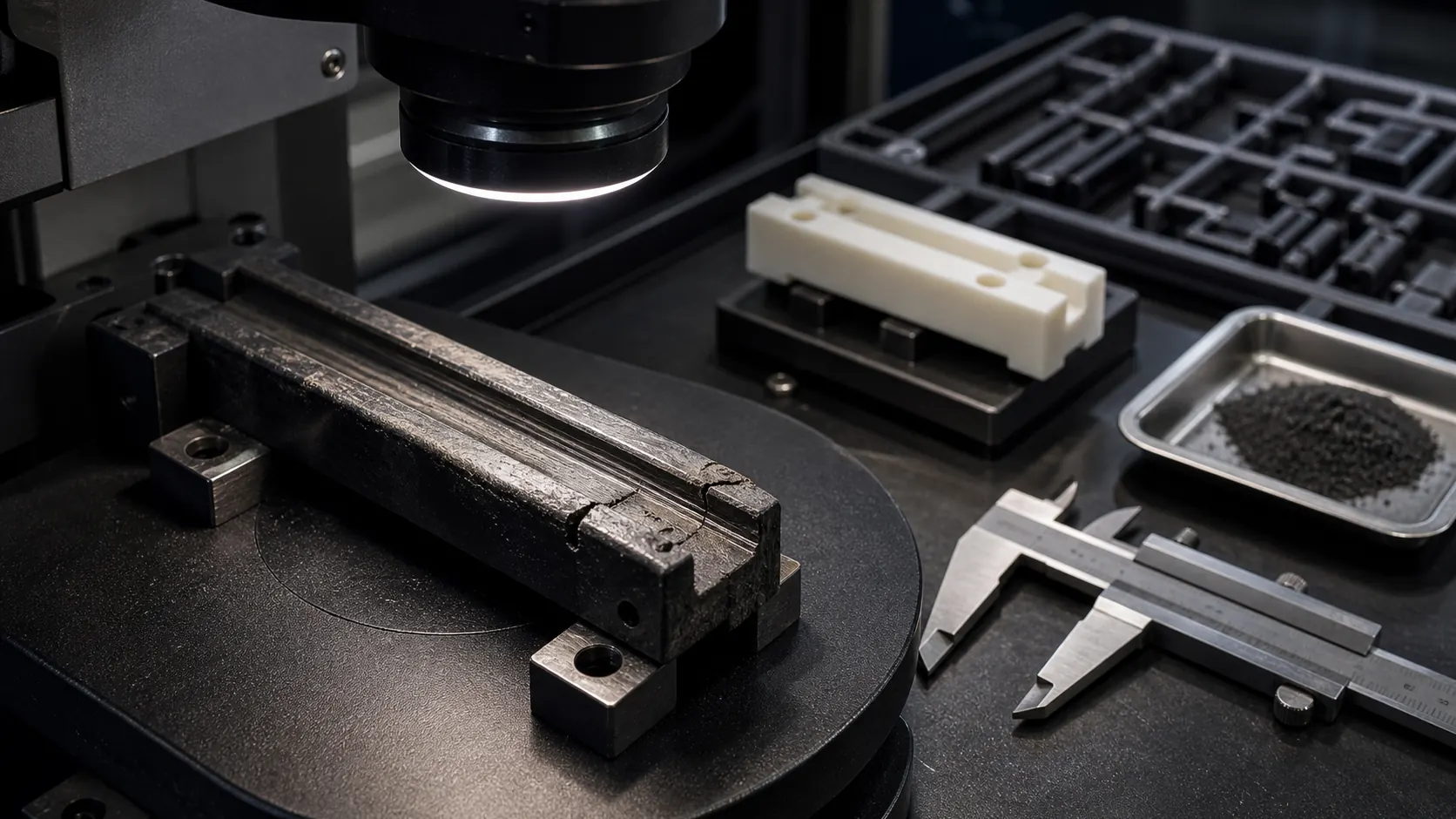
A customer had already replaced ordinary plastic with a “wear-resistant” grade, but the final part still failed the running test. The material itself looked stronger, but assembly scrap and noise remained high.
Original debugging record:
monthly production: 45,000 pieces; trial batch: 5,000 pieces; assembly scrap rate: 5.6%; wear-depth failure rate: 6.2%; noise complaint rate after test: 4.1%; average replacement direction: 3–4 months; main issue: material improved on paper but final part did not pass.
DEYU Evaluation
DEYU reviewed the problem by failure mode:
the part needed lower friction, not only higher stiffness; the previous high-filler route increased mating surface damage; molding shrinkage caused uneven contact; edge stress increased cracking during assembly.
DEYU recommended DGK-POM FL100T as a hybrid aramid-reinforced wear-resistant POM route for the first tuning round.
Adjustment direction:
reduce friction; avoid excessive hard filler exposure; improve flowability; adjust toughness balance; stabilize shrinkage; verify final part instead of only test bars.
5. Validation Data
| Item | Previous Wear-Resistant Grade | DEYU DGK-POM FL100T Tuned Route |
|---|---|---|
| Trial batch quantity | 5,000 pcs | 6,000 pcs |
| Assembly scrap rate | 5.6% | 1.9% |
| Wear-depth failure rate | 6.2% | 1.7% |
| Noise complaint rate after test | 4.1% | 0.8% |
| Average wear depth | 0.074 mm | 0.031 mm |
| Mating surface damage | Medium | Low |
| Replacement cycle direction | 3–4 months | 7–8 months direction |
Case Result
The final improvement came from matching the wear route to the real failure mode. The previous material increased stiffness but did not solve friction and surface-contact problems. After DEYU adjusted the compound direction, the customer’s trial batch showed lower scrap rate, lower wear-depth failure, and improved running stability.
6. What Buyers Should Send to DEYU
To diagnose a wear-resistant plastic failure, buyers should provide:
current material; current defect rate; monthly output; trial quantity; wear-depth data; noise data; mating material; part drawing; test method; failure photos; molding process; assembly method; target service life.
This allows DEYU to decide whether the issue should be solved by PTFE, aramid fiber, glass fiber, a hybrid system, process tuning, or part-structure adjustment.
Conclusion
Wear-resistant plastic failures should be diagnosed through customer validation data, not only pellet parameters. Defect rate, wear depth, noise, scrap rate, replacement interval, and final-part stability are more useful for material tuning.
DEYU can support DGK-POM FL100T grade development, small-batch validation, performance adjustment, and route comparison for POM, PA66, PTFE-modified plastics, aramid reinforced nylon, glass-fiber reinforced compounds, and hybrid wear-resistant materials.
Contact DEYU: market@deyuplastics.com Website: www.deyuplast.com