Why Does Glass-Fiber Reinforced Plastic Sometimes Wear the Mating Surface?
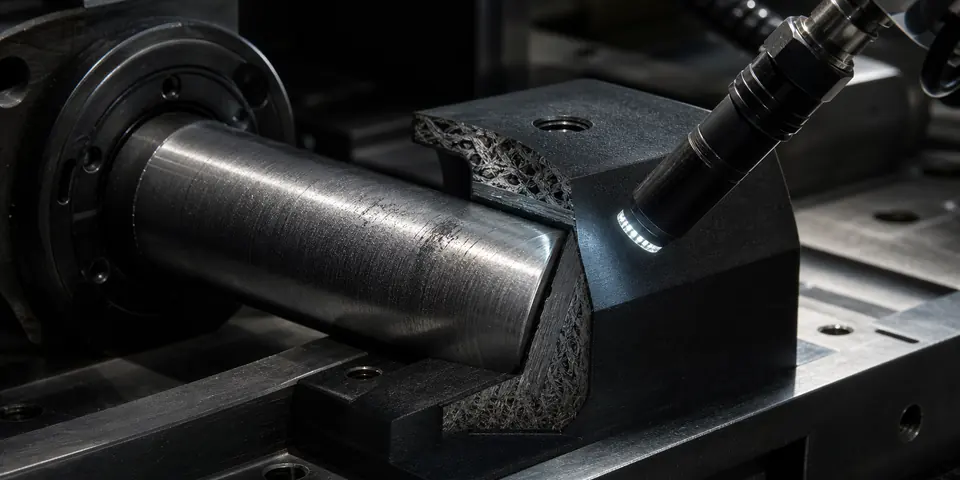
Glass-fiber reinforced plastic is often selected when customers need higher stiffness, better load-bearing ability, and improved dimensional stability. However, in sliding parts, glass fiber may sometimes create a new problem: the plastic part becomes stronger, but the mating surface wears faster.
Buyer and engineer FAQ
Questions engineers often ask about this material route
Where can modified plastic with a wear-resistant plastic requirement be used?
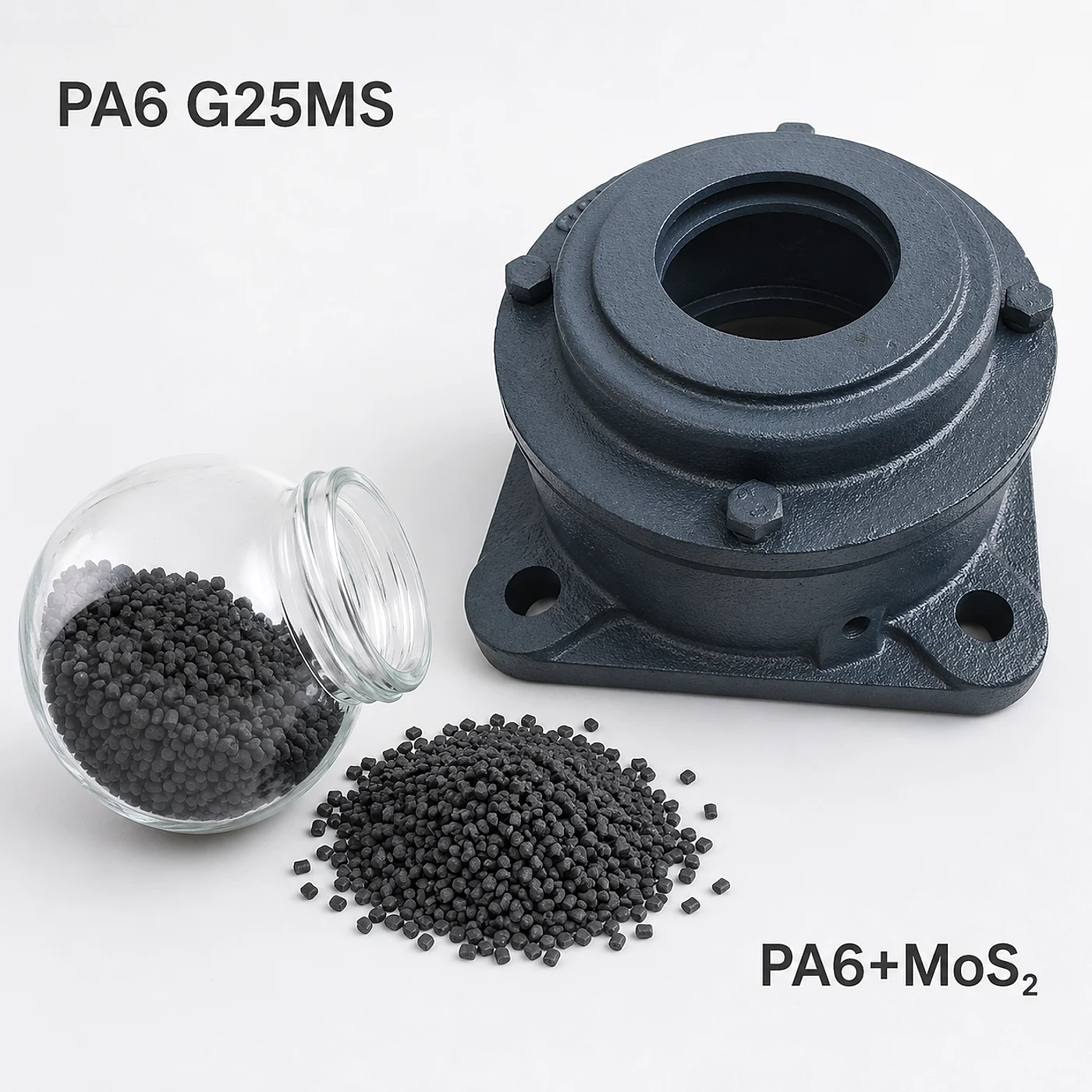
Typical fields include gears, rollers, bushings, sliding blocks, guide rails and low-noise moving parts. For this article, DEYU would first confirm the working environment, wall thickness, expected lifetime and whether wear-resistant plastics, MoS2 Wear-Resistant PA6 Pellets DGK-PA6 G25MS matches the part geometry or needs formulation adjustment.
What are the main performance indicators for the "wear-resistant plastic" target?
Focus on friction coefficient, wear depth, PV value, noise, dimensional stability and mating material compatibility. Buyers should ask for data on molded parts, not only pellet data, because gate position, filler orientation and thickness can change the final value.
What should engineers watch during injection molding or processing?
Dry PA grades correctly, control glass or aramid fiber orientation and validate wear on the real mating surface. Start from the base-resin processing window, then adjust by molded-part resistance, appearance and mechanical data.
What details help DEYU recommend wear-resistant plastics, MoS2 Wear-Resistant PA6 Pellets DGK-PA6 G25MS more accurately?
Send the current resin or grade, drawing or photo, wall thickness, annual quantity, target standard, failure mode and required color. If a reference grade already passed one test but failed in production, include both data sets.
For a precise recommendation, share the part drawing, base resin, target performance, processing method and test standard with DEYU.
1. The Problem
Glass-fiber reinforced plastic is often selected when customers need higher stiffness, better load-bearing ability, and improved dimensional stability. However, in sliding parts, glass fiber may sometimes create a new problem: the plastic part becomes stronger, but the mating surface wears faster.
wear-resistant plastics is the most relevant category when glass fiber must be balanced with friction and counter-surface protection.
Typical symptoms:
scratches on metal shaft; wear marks on mating plastic; noise increase; rough sliding feel; higher friction after running; reduced life of the mating component.
This is common when the part is treated only as a structural component, while the friction pair is not fully considered.
2. Why It Happens
Possible reasons:
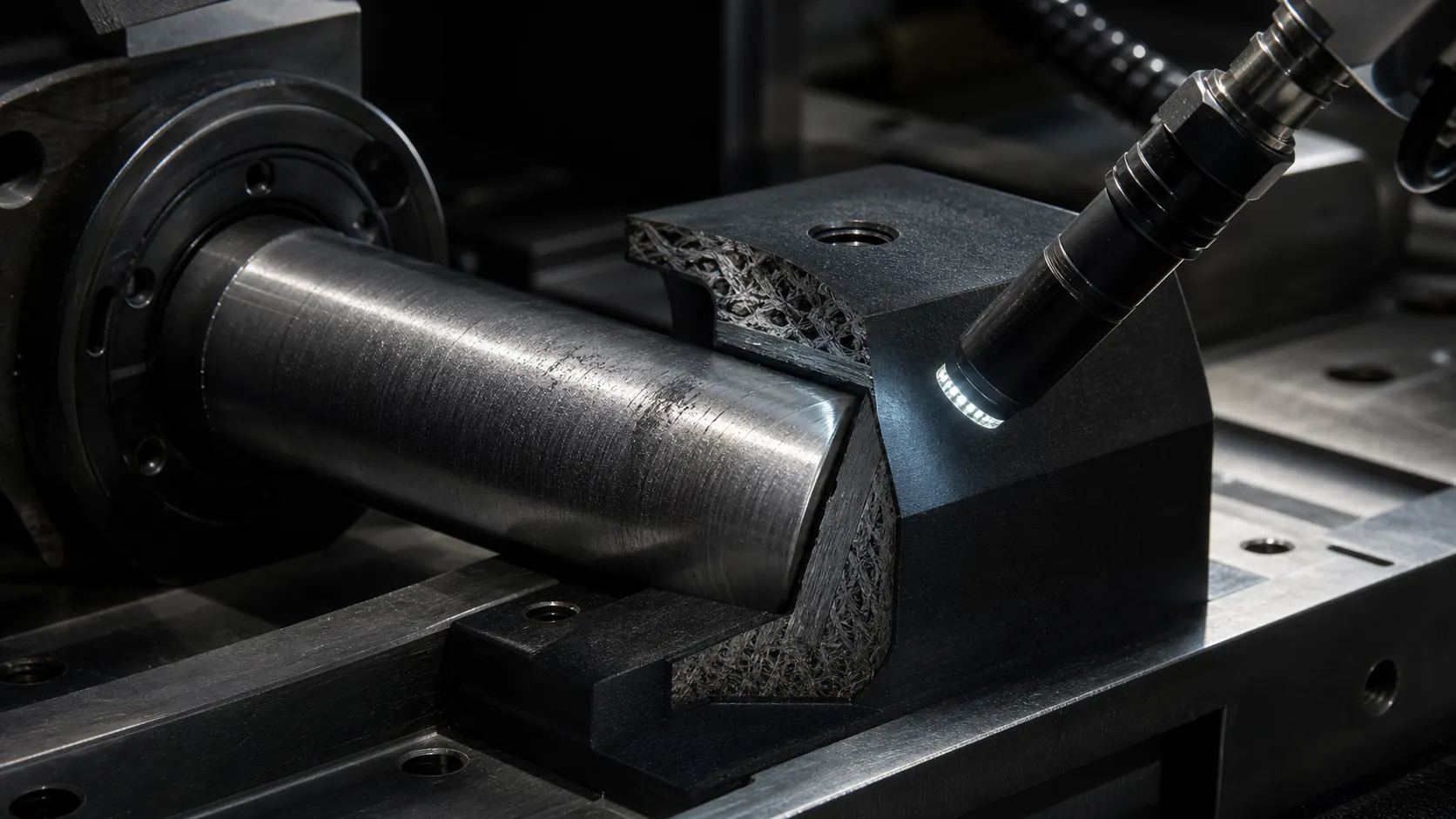
glass fiber is harder than many polymer surfaces; fiber tips may become exposed during sliding; surface roughness increases after wear; molded fiber orientation creates uneven contact; the material improves stiffness but not lubrication; the mating material is softer than expected.
Glass fiber can be very useful, but it is not automatically the best route for every wear-resistant plastic part.
3. DEYU Material Direction
DEYU may compare several DEYU wear-resistant routes:
glass-fiber reinforced POM or PA66; glass fiber + PTFE hybrid route; aramid reinforced PA66; POM + PTFE low-friction route; hybrid wear-resistant compound.
The goal is to decide whether the part mainly needs stiffness, lower friction, wear resistance, or protection of the mating surface.
4. Product Detail Fields Used for Route Selection
For glass-fiber and hybrid wear applications, DEYU treats the product page as route guidance first, then confirms the final grade by part testing.
| Product field | Wear-Resistant Plastics |
|---|---|
| Series / Model | DGR-POM wear-resistant series; PA66 PTFE series; PA66 MoS2 series |
| Technical Route | Wear-resistant modification using aramid fiber, PTFE, MoS2, lubricating additives or reinforcement systems to improve friction and wear performance. |
| Processing Methods | Injection molding / extrusion / compounding / pelletizing |
| Applications | Gears / Sliders / Bearings / Bushings and moving parts |
5. Customer Debugging Data
| Item | Standard Plastic | High Glass-Fiber Trial | DEYU wear-resistant plastics Balanced Route |
|---|---|---|---|
| Trial quantity | 4,000 pcs | 3,500 pcs | 5,000 pcs |
| Part deformation rate | 5.8% | 1.9% | 1.6% |
| Mating surface scratch rate | 0.8% | 6.4% | 1.7% |
| Noise after running test | 56 dB | 62 dB | 55 dB |
| Average wear depth of plastic part | 0.072 mm | 0.050 mm | 0.038 mm |
| Assembly scrap rate | 3.9% | 2.4% | 1.3% |
| Customer result | Too soft | Too abrasive | Balanced |
6. Result Interpretation
The high glass-fiber route improved deformation but increased mating surface damage. The DEYU wear-resistant balanced route kept dimensional support while reducing scratching and noise.
The solution was not to remove glass fiber completely, but to balance reinforcement with a wear and surface-control system.
Conclusion
Glass fiber is useful when stiffness and dimensional stability are important, but it must be evaluated together with the friction pair. For sliding parts, the mating surface is part of the material selection problem.