Aramid Fiber vs PTFE vs Glass Fiber: Which Wear-Resistant Plastic Route Should Buyers Choose?
When a plastic part wears too fast, many buyers immediately ask for PTFE, aramid fiber, or glass fiber. But these routes solve different problems.
Buyer and engineer FAQ
Questions engineers often ask about this material route
Where can PA66 / POM with a wear-resistant plastic requirement be used?
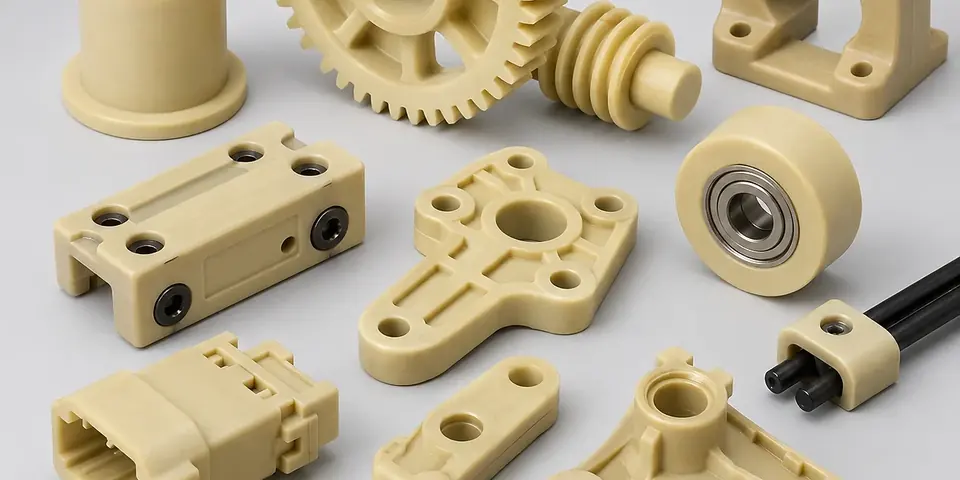
Typical fields include gears, rollers, bushings, sliding blocks, guide rails and low-noise moving parts. For this article, DEYU would first confirm the working environment, wall thickness, expected lifetime and whether DGK-POM TF90M, DGK-PA66 FL20L, Flame-Retardant Antistatic PA6 Pellets DGK-PA6 KJD789R-G30F matches the part geometry or needs formulation adjustment.
What are the main performance indicators for the "wear-resistant plastic" target on PA66 / POM?
Focus on friction coefficient, wear depth, PV value, noise, dimensional stability and mating material compatibility. Buyers should ask for data on molded parts, not only pellet data, because gate position, filler orientation and thickness can change the final value.
What should engineers watch during injection molding or processing?
For PA66 / POM, a practical starting window is 260-295°C melt / 75-100°C mold, dry before molding. Dry PA grades correctly, control glass or aramid fiber orientation and validate wear on the real mating surface. Final parameters should follow part thickness, gate design and the actual machine.
What details help DEYU recommend DGK-POM TF90M, DGK-PA66 FL20L, Flame-Retardant Antistatic PA6 Pellets DGK-PA6 KJD789R-G30F more accurately?
Send the current resin or grade, drawing or photo, wall thickness, annual quantity, target standard, failure mode and required color. If a reference grade already passed one test but failed in production, include both data sets.
For a precise recommendation, share the part drawing, base resin, target performance, processing method and test standard with DEYU.
1. Why Buyers Should Not Choose Only by Additive Name
When a plastic part wears too fast, many buyers immediately ask for PTFE, aramid fiber, or glass fiber. But these routes solve different problems.
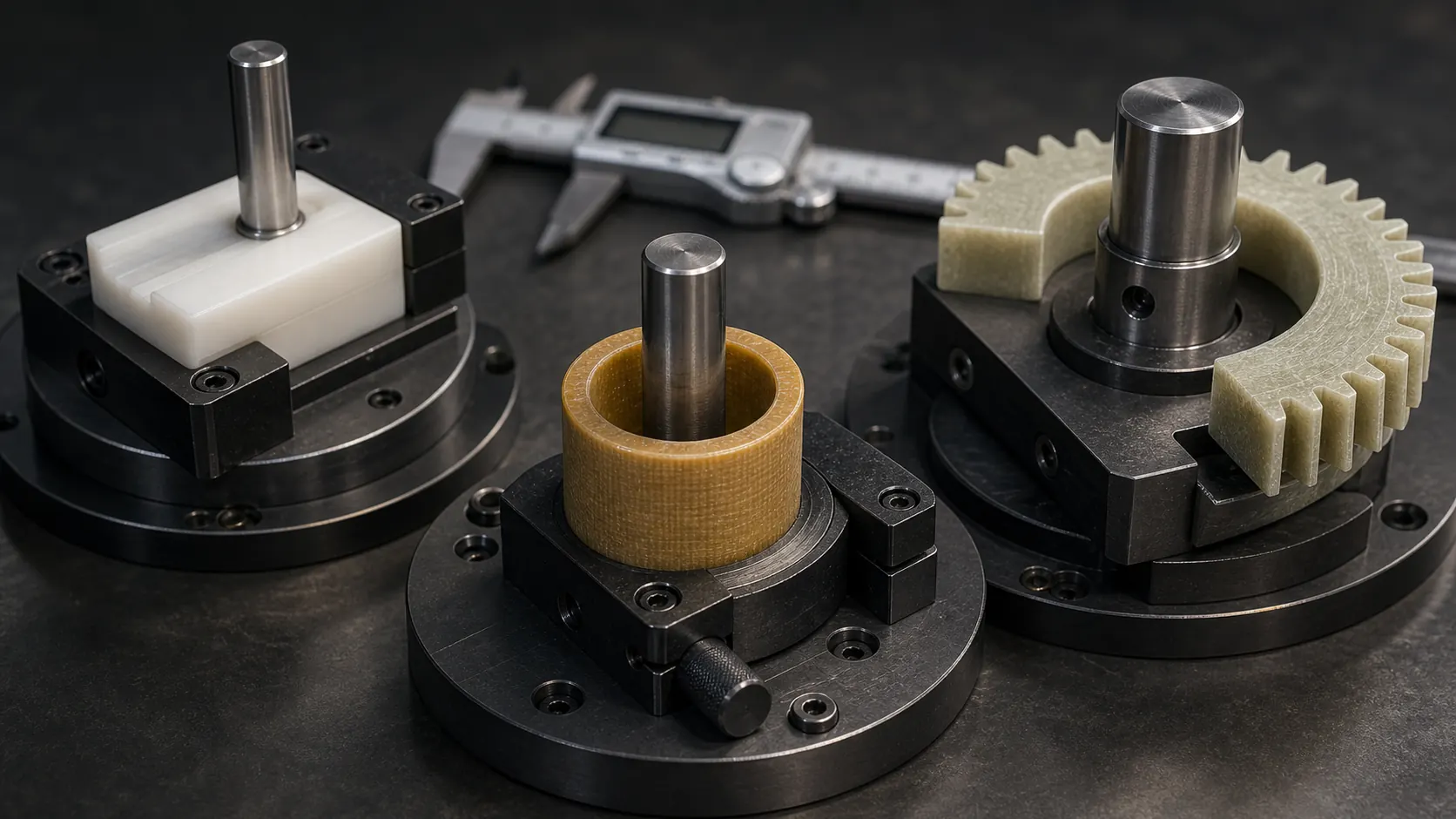
DGK-POM TF90M and DGK-PA66 FL20L. These two grades represent the PTFE low-friction route and the aramid reinforced wear-resistance route used in route comparison
PTFE mainly reduces friction. Aramid fiber helps improve abrasion resistance and toughness balance. Glass fiber increases stiffness and load-bearing ability. Hybrid routes may be needed when the part has multiple failure modes.
A suitable wear-resistant plastic compound should be selected by failure mode, not by additive popularity.
2. Route Comparison
| Route | Main Effect | Suitable Problem | Possible Risk |
|---|---|---|---|
| PTFE | Lower friction, smoother sliding | Noise, high friction, dry sliding | Strength or surface may decrease if overused |
| Aramid fiber | Wear resistance and toughness balance | Wear depth, clearance increase, repeated movement | Dispersion and color limitation |
| Glass fiber | Stiffness and dimensional stability | Deformation, load-bearing, structural support | May wear the mating surface |
| Hybrid system | Balanced performance | Multiple failure modes | Requires testing and tuning |
3. How the Same Part May Need Different Routes
A bushing with high friction may need PTFE. A bushing with clearance increase may need aramid fiber. A bushing with deformation under load may need glass fiber. A bushing with friction, wear, and deformation together may need a hybrid compound.
This is why DEYU often starts with the current failure mode:
noise; wear powder; wear depth; cracking; deformation; mating-part damage; high scrap rate; short replacement interval.
4. Internal Customer Case: Three Routes Compared for a Sliding Support Part
Original Pain Point
A customer used a standard PA66 sliding support part. The part had moderate load and repeated movement. After production, the customer reported wear marks, increased clearance, and occasional assembly scrap.
Original debugging record:
monthly production: 18,000 pieces; initial scrap rate: 4.2%; wear-depth out-of-limit rate: 5.9%; average wear depth: 0.096 mm; average service cycle before replacement: 4 months; main problem: wear and clearance increase.
DEYU Route Comparison
DEYU compared three DGK reference directions:
DGK-POM TF90M PTFE route; DGK-PA66 FL20L aramid fiber route; DGK-PA6 KJD789R-G30F glass-fiber reinforced PA6 route when stiffness, colorable ESD, and flame-retardant requirements are also relevant.
Validation Data
| Item | Standard PA66 | PTFE Route | Aramid Route | Glass Fiber Route |
|---|---|---|---|---|
| Average wear depth | 0.096 mm | 0.061 mm | 0.039 mm | 0.055 mm |
| Friction noise | Medium | Low | Low-medium | Medium |
| Clearance out-of-limit rate | 5.9% | 3.4% | 1.5% | 2.8% |
| Assembly scrap rate | 4.2% | 2.1% | 1.3% | 1.9% |
| Mating surface damage | Low | Low | Low | Medium |
| Replacement cycle direction | 4 months | 6 months | 8 months | 6–7 months |
Case Result
For this part, the aramid route gave the best balance between wear depth, clearance stability, and assembly performance. The PTFE route reduced friction more directly, while the glass fiber route improved stiffness but showed higher risk to the mating surface.
The final recommendation was not based on additive name, but on customer validation data.
5. DEYU Selection Method
DEYU usually recommends:
PTFE route when friction and noise are the main problems; aramid route when wear depth and toughness must be balanced; glass fiber route when stiffness and dimensional support are the main issues; hybrid route when several failures happen together.
Conclusion
PTFE, aramid fiber, and glass fiber are not interchangeable solutions. Each one improves a different part of wear performance.
For buyers, the most effective method is to test several DGK reference routes under the same customer condition and compare defect rate, wear depth, noise, replacement cycle, and final part quality.
Contact DEYU: market@deyuplastics.com Website: www.deyuplast.com